

If you’ve been searching for the smartest way to watch UK channels in 2026 without the buffering, the throttling, and the late-night drop-outs, the answer almost always lands on the same combination: iptv uk with vpn. The two technologies were practically built for each other. IPTV gives you the channels. The VPN gives you the speed, the privacy, and the consistency to actually enjoy them. And there is now a third option worth knowing about — a small but growing category of UK IPTV services that have moved past expecting users to layer on their own VPN, and instead build the equivalent protection directly into their delivery infrastructure.
This guide walks you through all three layers of the picture. Why running iptv uk with vpn matters in the first place. How to configure it properly if you decide to run your own. What to look for in a service that handles the heavy lifting for you. And how to tell the difference between a setup that will buckle the moment a few thousand viewers go online at once, and one that holds up cleanly through every peak-hour rush. By the end, you’ll have the full map — and you’ll know exactly where you want to sit on it.
Do You Actually Need a VPN to Watch IPTV in the UK?
The short answer is yes — and the reason is more practical than people assume.
UK internet service providers routinely manage the traffic flowing across their networks. When their systems detect sustained high-bandwidth video streams, especially during peak evening hours when the entire country is online at once, many quietly throttle that traffic to protect overall network performance. You don’t get a notification. You don’t get an email. You just get buffering, dropped resolution, and that frustrating spinning circle right when the action gets interesting. Most viewers blame their IPTV provider when this happens. The truth is that the bottleneck is usually upstream, sitting somewhere between your router and the wider internet, and there is very little your provider can do about it from their side — unless they’ve already engineered around it, which we’ll come back to.
Running iptv uk with vpn solves this in one move. By encrypting your traffic, the VPN prevents your ISP from identifying what kind of data is flowing through the connection. To the network, encrypted traffic looks like generic internet activity — indistinguishable from email, web browsing, or cloud backups. There is nothing to single out, nothing to throttle, and nothing to slow down. The result is consistent speeds, stable streams, and full bandwidth restored to whatever you originally signed up for. Whether you’re watching live UK sports on a Saturday afternoon, premium UK movies in the evening, or 4K entertainment late at night, the difference between a throttled connection and an unthrottled one is night and day.
Beyond throttling, there is also the privacy question. Streaming generates a steady, predictable signature on your network. Your ISP sees not just that you stream, but how long, how often, and how much bandwidth you use. For anyone serious about a smooth iptv subscription experience in the United Kingdom, that signature is worth covering. A VPN handles it. So does — and this is the shift — a service that ships with the protection already baked in.
Why iptv uk with vpn Runs Faster, Not Slower
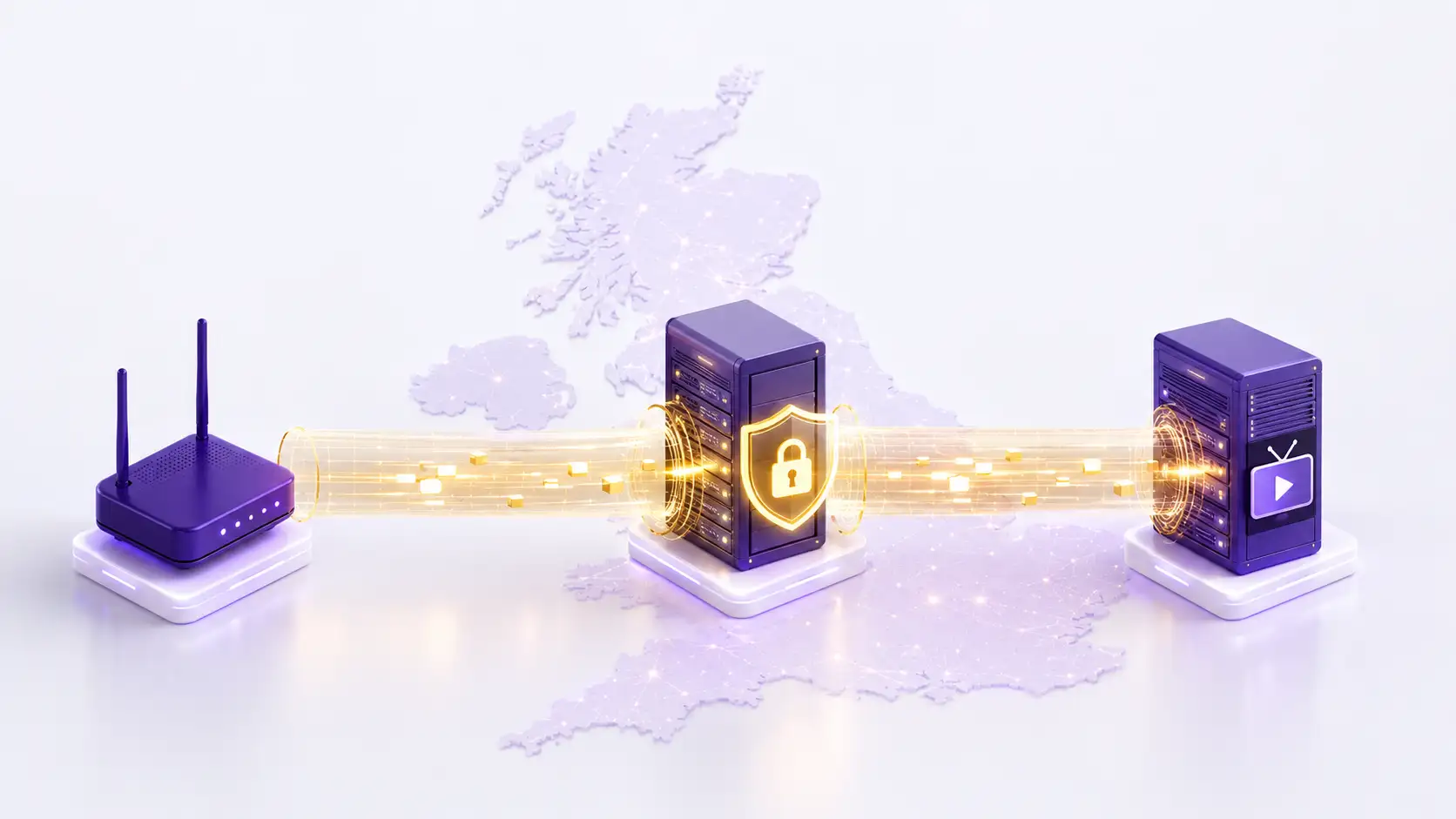
This is the part that surprises most people. A VPN adds an encryption layer, so logically it should slow things down. In practice, when you run iptv uk with vpn on a properly engineered service, the opposite usually happens. Once you understand the three reasons why, the entire setup makes more sense.
The first reason is throttling, which we already covered. The moment your ISP loses the ability to inspect your traffic, it loses the ability to single out streaming data for slowdown. Your connection runs at the speed you actually pay for, not at the speed your ISP decides is reasonable for streaming traffic at 9pm on a Friday. For viewers on premium fibre packages who feel like they’re somehow getting copper-era speeds during peak hours, this single change is often transformative.
The second reason is routing. A good VPN lets you connect through a server with a less congested path to the IPTV provider’s network. UK residential connections are routed through a relatively small number of internet exchange points, and during peak hours those exchanges get hammered. A VPN server, especially one running on a premium commercial network, often sits closer to better-peered routes — which means your stream travels along a clearer, faster path. On a busy Friday night, this routing difference alone can be the line between 4K and 360p.
The third reason is peering. IPTV streams travel across multiple network hops between the source server and your TV. Each hop adds latency. VPN servers from quality providers are typically hosted in tier-one data centres with premium peering arrangements, which means fewer hops, less latency, and faster start-up times when you change channels. The practical effect is what users describe as instant iptv uk performance — channels load in under two seconds, 4K plays without buffering, and live sports stay perfectly in sync with the action on screen.
There is one important caveat, and it’s worth pausing on. All three of these performance gains depend on the IPTV service on the other end being properly engineered to receive VPN traffic. A poorly built service will throttle its own VPN users, lock accounts to a single home IP address, or route everyone through one overworked server regardless of where they connect from. Get on the wrong service, and even a perfectly tuned iptv uk with vpn setup won’t save you. We’ll come back to how to spot the difference.
The Privacy Layer: What Encryption Actually Protects
Performance is half the equation. Privacy is the other half, and it matters more than most casual viewers realise. Encryption — whether it comes from a VPN you run yourself or from a service that handles it on your behalf — does three specific things for UK IPTV viewers, and each one closes a gap that exists by default on a standard home connection.
The first is packet encryption. Every packet that leaves your device, from the moment your IPTV app requests a channel to the moment that channel starts playing, gets wrapped in a layer of encryption that nobody on the path can read. Not your ISP. Not your network administrator. Not whoever happens to be running the public Wi-Fi at the café you’re streaming from on holiday. The encryption is mathematically robust, instant, and invisible to you as a user. You don’t change how you watch — you simply watch with privacy intact.
The second is IP masking. Your home IP address is essentially a digital signature. Every site you visit, every stream you load, and every server you connect to logs that address. Encryption-routed traffic replaces your home IP with a server-side address, meaning your viewing history can no longer be tied back to your home connection. This is not paranoid territory — it’s basic digital hygiene in 2026. If you wouldn’t broadcast a list of every site you visited last week to your neighbours, you shouldn’t be broadcasting the same list to your ISP and to every server your traffic touches along the way.
The third is DNS leak protection. This one is often overlooked, and it’s where most amateur setups fall down. Even when a VPN is running, an improperly configured device can leak DNS requests to your ISP — meaning your encrypted traffic is private, but the list of domains you’re connecting to is still visible. Quality VPN apps prevent this automatically. Services with built-in protection close the gap at the infrastructure level, before the request ever leaves the network. Either way, the principle is the same: privacy is only meaningful when it’s complete.
Best VPN Settings for Smooth iptv uk with vpn Streaming
If you’re going the run-your-own-VPN route, most VPN apps default to settings that prioritise security over speed. For IPTV, you want a slightly different balance — one that keeps the security strong enough to be meaningful but tunes everything else for streaming performance. Here’s what to look for, in order of impact.
Protocol. This is the single biggest setting. Choose WireGuard or a similar modern protocol if your VPN offers it. WireGuard is dramatically faster than older standards like OpenVPN, uses less battery on Firestick or Android devices, and connects in under a second instead of taking ten. If WireGuard isn’t available, IKEv2 is the next-best choice on iOS and IKEv2 or OpenVPN UDP on Android. Avoid OpenVPN TCP for streaming — it’s slower and built for reliability over speed.
Server location. For UK channels, connect to a server inside the UK or in a neighbouring country with strong peering — not somewhere distant. The closer the server, the lower the latency, and the faster channels switch. Connecting to a server in the United States to watch UK content adds unnecessary travel distance to every packet and tanks your channel-change speed.
Encryption level. AES-128 is plenty for streaming. AES-256 is more secure on paper but slightly heavier in practice. If you’re running on an older Firestick or a budget Android box, AES-128 will give you noticeably smoother playback without compromising privacy in any practical sense. The difference between AES-128 and AES-256 is meaningful for state-level adversaries, not for keeping your ISP out of your business.
Kill switch. Always on. If the VPN drops mid-stream — even for a second — the kill switch stops your traffic instantly so your real IP is never exposed. Without it, a brief disconnection can leak your address to whatever server you’re streaming from. With it, the worst that happens is your video pauses for a moment until the VPN reconnects.
Split tunnelling. Route only your IPTV app through the VPN, and let everything else use your normal connection. This frees up bandwidth, reduces strain on the VPN, and means video calls, downloads, and gaming on other devices stay on their fastest possible path. Not every VPN supports split tunnelling, but the good ones do, and once you’ve used it you won’t go back.
If all of this sounds like a lot of moving parts to get right — that’s because it is. Which is precisely why the next category of service exists.
When the Service Already Handles iptv uk with vpn Protection For You
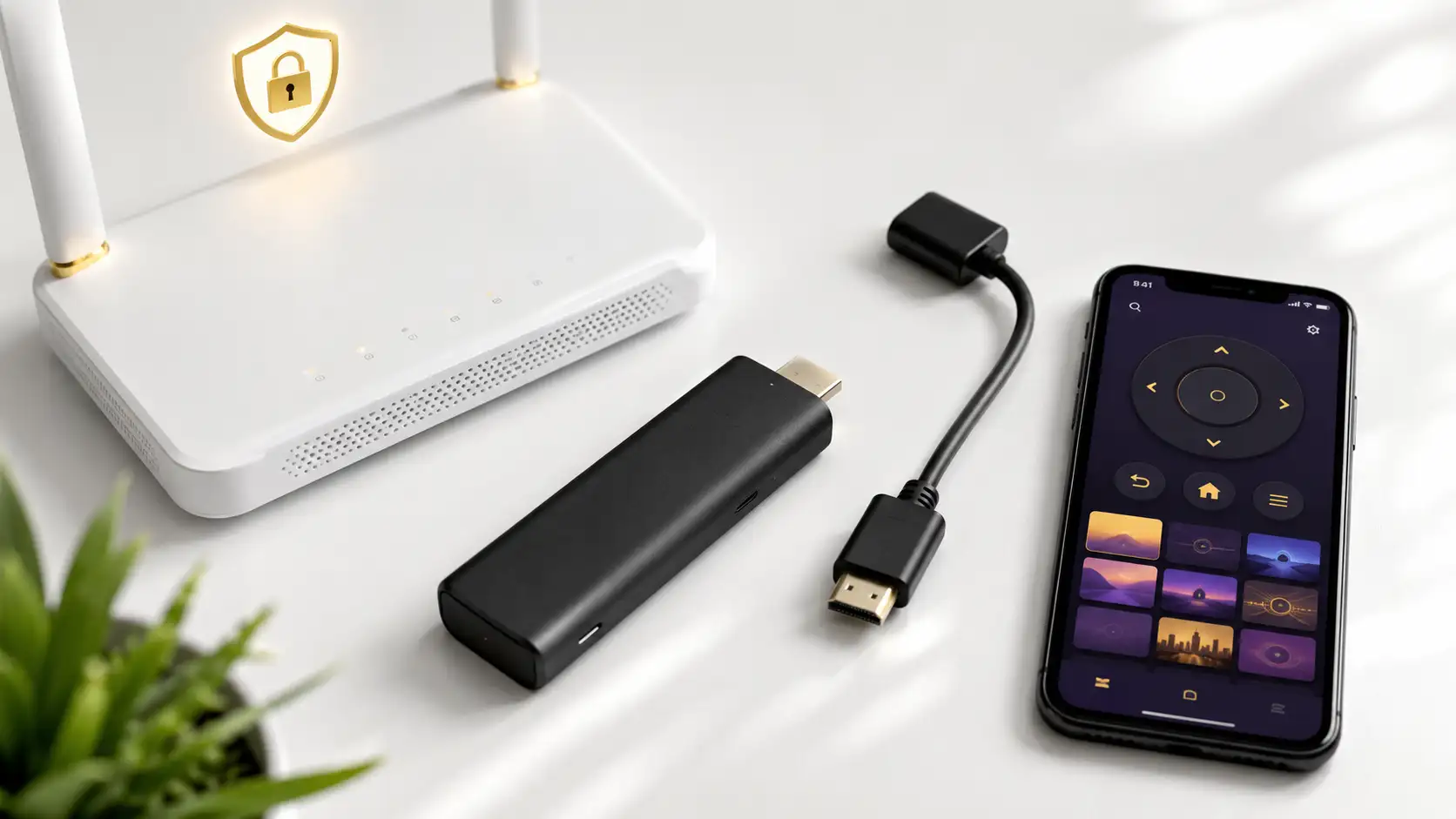
The model of running iptv uk with vpn manually has been the standard advice for years, but it carries a quiet assumption: that every viewer is willing and able to install, configure, and maintain a VPN correctly on every device they stream on. Most viewers aren’t, and shouldn’t have to be. The newer category of UK IPTV services has responded to this by engineering the protection directly into the delivery layer, so the average viewer gets the speed and privacy benefits without ever touching a VPN app.
Here’s what that looks like in practice. The service runs its streams across encrypted infrastructure by default. The traffic that reaches your ISP is already opaque, so there’s nothing distinctive to throttle. The delivery network is multi-server and geo-distributed, so individual server load never becomes the bottleneck. And because the encryption sits inside the service rather than being layered on by the user, there is no risk of misconfiguration, no kill switch to forget, no DNS leak to test for, and no protocol setting to second-guess.
This is how a serious fast iptv uk experience should feel in 2026: you sign up, you install the app, you watch. No VPN to install separately. No router flashing. No support thread three days into your subscription asking why a particular channel buffers only on certain servers. FastIPTV© was built around this exact principle — VPN-grade protection baked into the infrastructure, multi-server delivery across the UK and Europe, true 4K streams with adaptive bitrate, and no IP-locking on any account. You can still run your own VPN on top if you want belt-and-braces coverage, and it will work cleanly, but you don’t have to.
For viewers who want the maximum control, manually configuring iptv uk with vpn remains a valid choice. For everyone else — which is most people — picking a service that handles the protection layer for you removes 90 percent of the friction without giving up any of the benefits.
How to Set Up iptv uk with vpn Step by Step
If you’ve decided to run your own VPN alongside your IPTV subscription, the setup takes about five minutes. There is no advanced networking required, no router flashing, no config files to edit. Here’s the cleanest workflow for getting iptv uk with vpn running on any device, written for someone who has never set up a VPN before.
Step 1. Install the VPN app on the device you stream on. For most UK viewers this means a Firestick, an Android TV, a phone, or a laptop. If you stream on multiple devices, install the VPN on your router instead — that way every device in the house is automatically covered, including ones that don’t natively support VPN apps such as smart TVs and games consoles.
Step 2. Connect to a UK server, or the nearest available alternative if your provider doesn’t have UK locations. Confirm the connection is active before launching your IPTV app. Most VPN apps display a clear connected status with the server location and an active timer.
Step 3. Enable the kill switch in the VPN settings. This is non-negotiable for streaming. It takes one toggle and protects you for every session afterward.
Step 4. Open your IPTV player — typically a Smarters-style app on Firestick — and load your subscription. The connection runs through the VPN automatically. There is no extra configuration needed inside the IPTV app itself. The app sees a normal, fast internet connection and behaves exactly as if you were streaming without a VPN.
Step 5. Test playback. Open a high-bitrate 4K channel. If it plays smoothly within two seconds and stays stable for ten minutes, your iptv uk with vpn setup is correct. If it stalls, switch your VPN to a different UK server and retest. Most issues during initial setup are server-choice issues, not configuration issues.
That’s it. Once it’s working, it stays working. You don’t need to reconfigure anything between sessions, and the VPN will reconnect automatically every time the device wakes up.
What to Look For in a UK IPTV Service
Whether you plan to run iptv uk with vpn manually or rely on a service with built-in protection, the underlying IPTV infrastructure has to be right. A bad service will buckle either way. When evaluating any iptv subscription in the United Kingdom, here are the four signs that separate the serious operators from the hobbyists.
No IP-locking on accounts. You should be able to stream from any location, on any network, behind any VPN, without your account flagging or your stream cutting out. This is the single most important compatibility feature for iptv uk with vpn use. Providers that lock accounts to a single home IP are showing their age — and they will fight you every time you go on holiday, switch networks, or enable a VPN.
Multi-server architecture. A provider running on a single server will buckle the moment more than a few hundred users connect simultaneously. Multi-server setups distribute load across geography and capacity, and stay smooth even during the busiest streaming windows. This is what makes the difference between a service that works on Tuesday afternoon and one that works on Friday night.
4K-ready bitrates with adaptive scaling. fhd iptv uk is the minimum acceptable standard now. A serious provider delivers true 4k iptv uk on premium channels with adaptive bitrate, so quality scales gracefully to your actual connection speed rather than collapsing under it. If a provider can’t show you a stable HD & 4K channel during a free trial, they almost certainly can’t show you one during a paid subscription either.
24/7 channel uptime, verified during peak hours. Test before you commit. A free trial is the fastest way to know whether a service holds up during the windows that matter most — Friday and Saturday evenings, weekend afternoons, and late-night marathon sessions. Stream for two hours during one of those peaks before deciding.
A service that ticks all four of these boxes is a service that will work cleanly with iptv uk with vpn if you choose to add a VPN, and will work cleanly on its own protection layer if you don’t.
Common Streaming Problems and How to Fix Them
Even with a great setup, occasional hiccups happen. Here are the four most common ones and the fixes that actually work, in order of frequency.
Problem one: stream cuts out the moment the VPN connects. The cause is almost always IP-locking on your IPTV account, where the provider has tied your subscription to your home IP address. The fix is to switch to a service that supports iptv uk with vpn natively — or, better, one with protection already built in so the question never comes up. If your current provider refuses to disable IP-locking on request, that tells you everything you need to know about the provider.
Problem two: buffering only on certain channels. This usually means the VPN server you’re connected to is too far from the IPTV server cluster, or the path between them is congested. Switch your VPN to a different UK server, or to a server in a nearby country with good peering, and retest. The fix is almost always a one-tap server change.
Problem three: 4K plays at SD quality. AES-256 encryption is overwhelming an older streaming device. Drop to AES-128, switch to WireGuard if available, or upgrade to a Firestick 4K Max if your hardware is more than a couple of years old. Underpowered hardware is the silent killer of 4K streaming.
Problem four: app crashes when the VPN disconnects. No kill switch is configured, or the kill switch is set to soft mode. Enable a hard kill switch in your VPN settings — the IPTV app will pause cleanly instead of crashing, and resume the moment the VPN reconnects. This is the single most common cause of mid-match app crashes during live sports.
Once these four are sorted, you’ll have a stable, private, throttle-free streaming setup that holds up through every peak-hour rush, every Friday-night congestion spike, and every late-night marathon viewing session.
Final Word
The pairing of iptv uk with vpn isn’t just a technical recommendation — it’s the practical baseline for anyone who wants a stable, private, and genuinely fast streaming experience in 2026. The VPN handles privacy and unthrottles your connection. The IPTV service delivers the channels. When both are built to work together from the start — or when the service has already absorbed the VPN layer into its own infrastructure — you stop thinking about the technology entirely and just watch.
If you’d rather skip the configuration work altogether, FastIPTV© plans are pre-configured for VPN-grade protection across every major device, multi-server, 4K-ready, no IP-locking, stable from the very first stream. Bring your own VPN if you want the extra layer. Or don’t, and let the service handle it. Either way, iptv uk with vpn is no longer something you have to engineer yourself — it’s the new baseline.
Frequently Asked Questions
Using a VPN itself is fully legal in the UK, as is subscribing to a licensed IPTV service. Always make sure your provider is operating legitimately and that you’re using the service in line with its terms.
A properly configured VPN almost always improves IPTV speeds in the UK because it bypasses ISP throttling. The encryption overhead is minimal compared to the speed gained.
Not necessarily. A well-engineered service with built-in encryption and multi-server delivery handles the same job at the infrastructure level. You can layer your own VPN on top for extra peace of mind, but the underlying performance and privacy benefits are already there.
Not if you install the VPN on your router — that protects every device on your network automatically. Otherwise, install it on each device you stream on.
WireGuard is the fastest and most efficient for streaming, especially on Firestick and Android devices. IKEv2 is a strong second choice on iOS.
Yes — and on a good provider with multi-server architecture, you’ll get a smoother 4K experience with the VPN than without it.
Yes. FastIPTV© is engineered with VPN-grade protection built in and runs seamlessly with any major external VPN if you want to add one. There’s no IP-locking, no throttling, and no extra setup required.
Table of Contents